
2026 Ranking: Which African armies are the most powerful today?
Behind the figures of the Global Firepower Index lies a political and strategic map of the military balance of the African continent.
Each year, the ranking established by the Global Firepower Index establishes itself as a global reference for measuring the military power of States, but behind the apparent neutrality of the figures lies a much more political reality, revealing the strategic priorities, regional tensions and ambitions for sovereignty that are currently sweeping through the African continent, where the issue of security has become a central issue of both internal stability and international positioning.
In its 2026 edition, widely reported by the African and international specialized press , this ranking is based on more than sixty criteria combining personnel, air and naval capabilities, heavy equipment, logistics, defense budget, industrial autonomy and projection capacity, thus offering a global snapshot of African armed forces, while recalling that military power is not limited to an accumulation of weapons but also reflects long-term political choices.
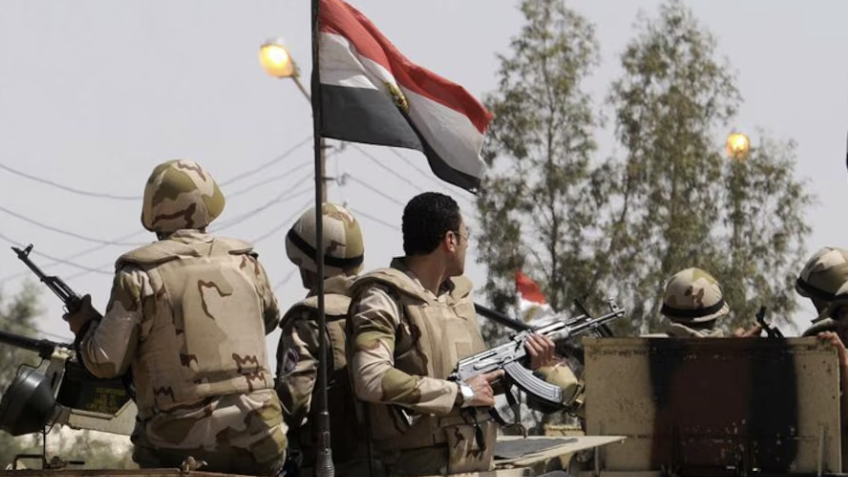
Unsurprisingly, Egypt has once again established itself as the leading African military power, rising to 19th place worldwide, a position that confirms the country's centrality in regional security balances, but also the scale of investments made by Cairo to modernize its army, strengthen its naval capabilities in the Mediterranean and the Red Sea, and consolidate its role as a security pillar between Africa and the Middle East, in a context marked by geopolitical tensions and the realignment of alliances.
Right behind, Algeria confirms its status as a military heavyweight in the Maghreb and on the continent, occupying second place in Africa and 27th in the world, a rank which reflects both the size of its forces and the structure of its defense apparatus, historically oriented towards the protection of the national territory and the management of regional instabilities, particularly in the Sahel, where Algiers seeks to maintain a strategic influence while asserting a doctrine of assumed military sovereignty.
Nigeria, Africa's largest population, ranks third on the continent and 33rd globally, a position that illustrates the paradox of a powerful army in terms of numbers but facing persistent internal security challenges, including a jihadist insurgency in the northeast, armed crime and community tensions, forcing Abuja to mobilize a significant portion of its military capabilities on its own territory, sometimes at the expense of its regional projection.
South Africa and Ethiopia complete the leading African group, with very different but strategically decisive profiles, Pretoria retaining a technological and industrial advantage inherited from its military history, while Addis Ababa relies on considerable personnel and a central geopolitical role in the Horn of Africa, a key region where internal conflicts, cross-border rivalries and international interests intersect.
Further down in the rankings, countries like Morocco, Angola, the Democratic Republic of Congo, and Sudan occupy intermediate positions that reflect contrasting dynamics, between gradual rise to power, post-conflict restructuring, or weakening linked to prolonged political crises, reminding us that military power does not guarantee internal stability or operational effectiveness without solid governance and sustainable institutions.
Beyond the numerical hierarchy, the 2026 ranking highlights above all an Africa where armies have become political actors in their own right, often called upon to fill the gaps of civilian states, to secure fragile territories or to establish themselves as instruments of national legitimacy, in a context where security remains one of the primary determinants of development, investment and regional stability.
Thus, more than a simple ranking, this military mapping of the African continent reveals the fault lines, the silent ambitions and the precarious balances that are shaping Africa's security future today, at a time when the question is no longer just which army is the most powerful, but which will be able to sustainably guarantee peace, sovereignty and stability of its state.


Leave a comment
This site is protected by hCaptcha and the hCaptcha Privacy Policy and Terms of Service apply.