
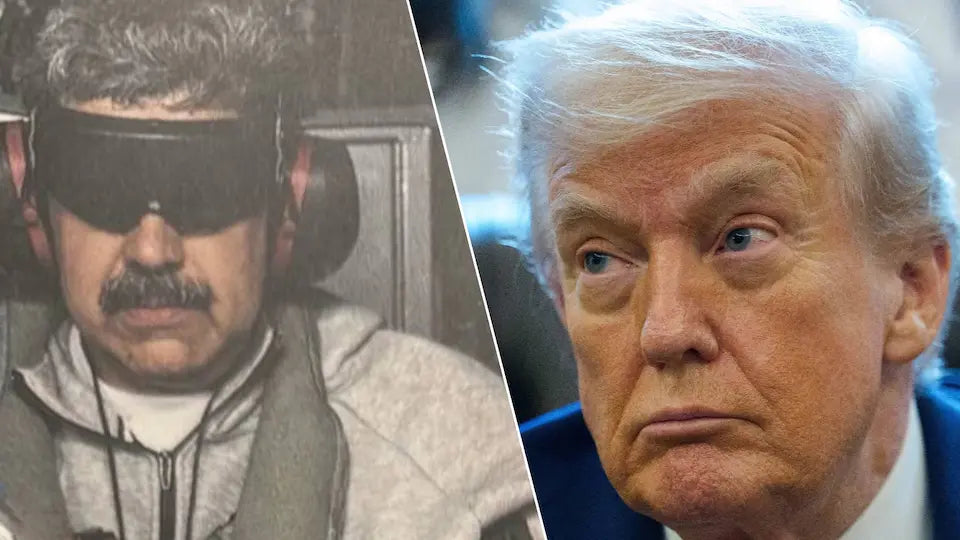
Crisis in Venezuela: African reactions to the American intervention and the capture of Maduro
The US-led military assault on Venezuela on January 2 and 3, 2026, which resulted in the capture of President Nicolás Maduro, sent shockwaves far beyond the Americas. On the African continent, official reactions reflected a vigilance regarding respect for national sovereignty, a call for mediation and dialogue, and concerns about the erosion of the international order.
The African Union calls for respect for sovereignty
The African Union (AU) quickly condemned the "abduction" of Nicolás Maduro by US forces and expressed its solidarity with the Venezuelan people. The pan-African organization called on all parties to exercise restraint, responsibility, and respect for international law, stressing that Venezuela's challenges can only be resolved through inclusive political dialogue among Venezuelans themselves, in a spirit of peace and international cooperation.
This reaction illustrates the AU's concern about any action that could be perceived as a violation of a state's sovereignty, a fundamental principle of international law and the AU Charter.
Calls for peace rather than conflagration
Several African capitals have followed this diplomatic line, calling for the avoidance of regional escalation. These voices reflect both a defense of multilateralism and a reluctance to see a major power intervene militarily in the territory of a third country without a clear mandate from an international body such as the UN.
Although the position of many African states has not been detailed individually, the principle of non-interference in internal affairs and the peaceful settlement of disputes is central to African declarations, including those relayed by the AU.
Concerns about international order and sovereignty
Beyond the official position of the African Union, some African observers and diplomatic officials have expressed concerns about the potential impact of this intervention on the world order, already weakened by successive crises. The capture of Maduro by foreign forces without an explicit UN Security Council resolution is seen by several actors as a dangerous precedent, likely to encourage further unilateral interventions.
This concern is all the more acute given that the American action occurred in a context where relations between global powers and developing countries are already strained, particularly regarding economic, monetary, and geopolitical issues. The rise of blocs like the BRICS, seeking to diversify alliances and reduce traditional monetary hegemony, resonates in several African capitals that are closely monitoring these developments.
Between African solidarity and diplomatic realities
The African reaction also reflects a logic of solidarity among nations historically concerned with their independence and sovereignty, principles inherited from anti-colonial struggles. While no African state openly called for political or military support for Maduro in the days following the event, the general tone of diplomatic reactions emphasizes:
-
the need to respect the Charter of the United Nations and the norms of international law,
-
the priority given to a negotiated political solution, and
-
the importance of preventing the crisis from spilling over into other regions or being used as justification for interventions without a mandate.
This approach reflects a delicate balance: African states intend to defend the principles of sovereignty and peaceful settlement, while navigating an international framework increasingly polarized by tensions between great powers.
African reactions following the US intervention in Venezuela and the capture of Nicolás Maduro have largely converged on calls for restraint, respect for international law, and the peaceful settlement of disputes , embodied in particular by the positions of the African Union. They reflect a broader concern about the future of global governance, state sovereignty, and the norms governing the engagement of major powers on the international stage.


Leave a comment
This site is protected by hCaptcha and the hCaptcha Privacy Policy and Terms of Service apply.