
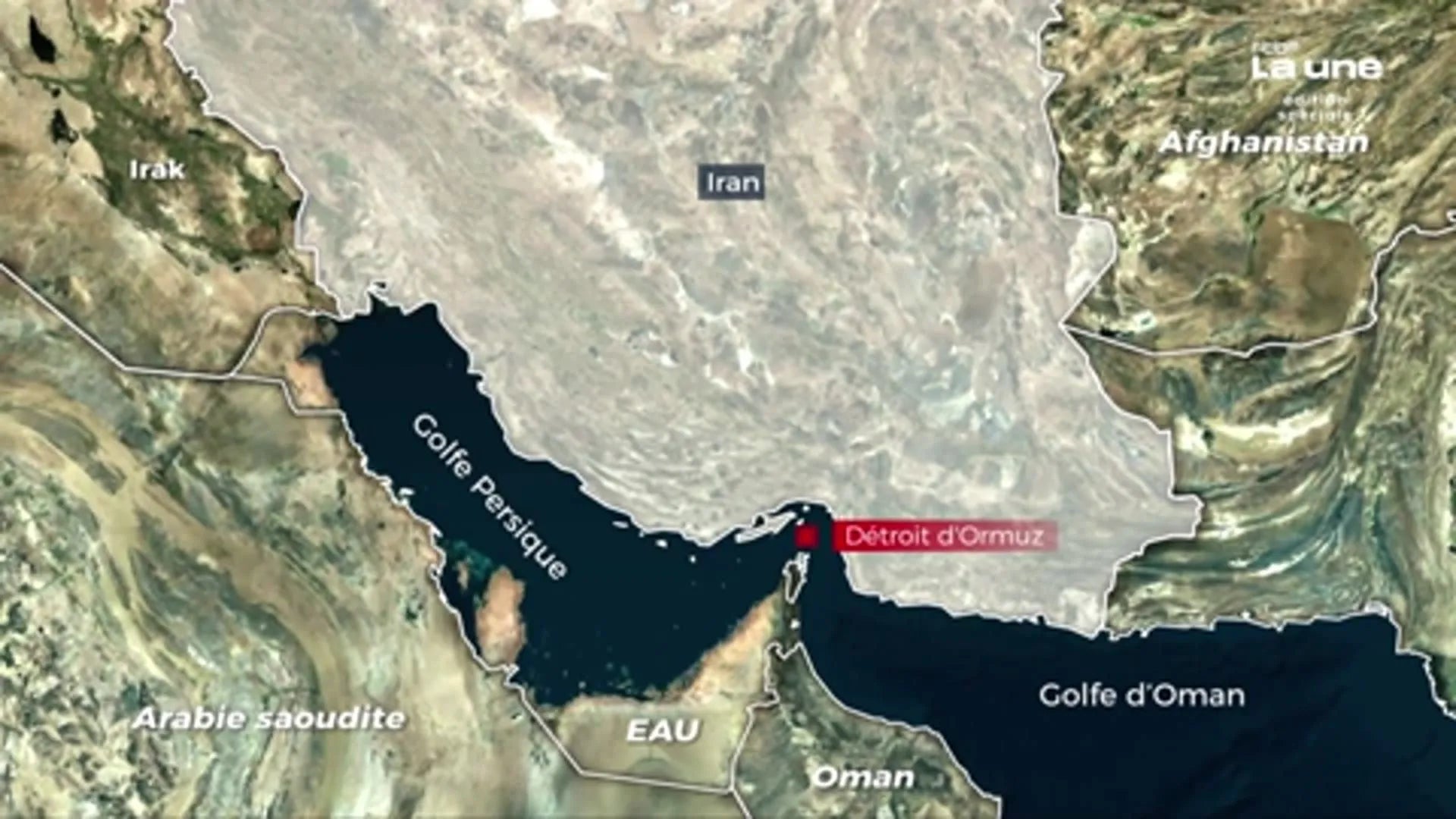
Strait of Hormuz: Iranian crisis rattles global oil market
Ship attacks in the Gulf heighten tensions around a strategic passage through which nearly 20% of the world's oil transits.
As the conflict involving Iran enters its thirteenth day, the Strait of Hormuz is emerging more than ever as the epicenter of the crisis. On Wednesday night into Thursday, several oil tankers sailing near this strategic passage were targeted.
An attack on two oil tankers off the coast of Iraq killed a crew member, while a Thai-flagged cargo ship was set on fire.
These maritime incidents confirm the intensification of tensions in the Gulf.
Increasing pressure on maritime traffic
Since the start of the conflict, nearly twenty commercial and oil tankers have reportedly been targeted in the region, according to several security sources.
The Iranian Revolutionary Guard has also made numerous threatening statements, asserting that any attempt to pass through the Strait of Hormuz could be considered a legitimate target.
Iranian forces have also used drones to target several regional infrastructures, including Dubai airport.
This strategy appears to be aimed at increasing pressure on the energy routes connecting the Middle East to global markets.
Hormuz, a key passage for the global economy
The Strait of Hormuz is one of the most sensitive chokepoints for global energy trade.
Normally, about 20% of the world's oil and liquefied natural gas transits through this maritime corridor connecting the Persian Gulf to the Indian Ocean.
Any sustained disruption to this traffic can quickly cause tensions in energy markets.
For several days, oil prices have shown significant fluctuations, reflecting the uncertainties related to maritime transport security in the region.
Oil markets under surveillance
Facing the risk of supply disruption, the International Energy Agency (IEA) announced the release of 400 million barrels of oil from the strategic reserves of its member countries.
This measure aims to stabilize markets and limit the impact of a potential paralysis of the Strait of Hormuz on the global economy.
But the effectiveness of this mechanism will depend on the duration of the conflict and the evolution of the security situation in the Gulf.
A conflict with global repercussions
Beyond the military confrontation, the current crisis highlights the vulnerability of international energy routes.
Iran's ability to disrupt maritime traffic in the Strait of Hormuz has long been a strategic lever in regional geopolitical balances.
If the attacks continue, the repercussions could quickly extend beyond the Middle East to affect all energy markets.
In this context, the security of the Strait of Hormuz appears more than ever to be a central issue for global economic stability.


Leave a comment
This site is protected by hCaptcha and the hCaptcha Privacy Policy and Terms of Service apply.