
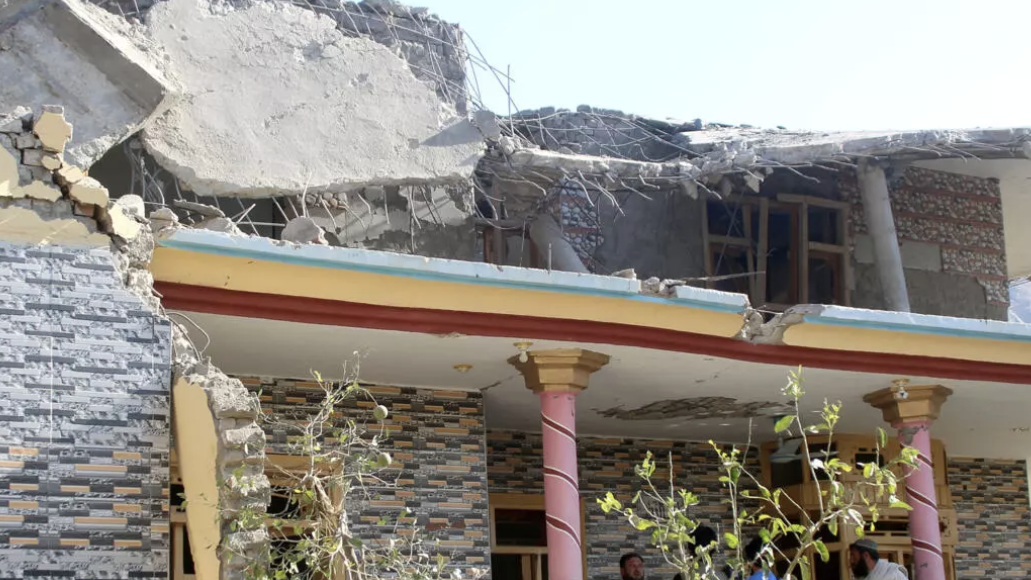
Deadly strike in Pakistan: Ten Afghan civilians killed in controversial operation
Another tragedy crosses the Pakistani-Afghan border with the same old bad habits. A strike, deaths, denials, and that palpable unease that hangs in the air whenever the word "civilian" appears in military communiqués. Ten Afghans were killed. Ten lives, swept away like dust in the name of "national security." In Pakistan, they call it a "necessary" operation. In Kabul, they cry foul. And in the middle, a whiff of cynicism that has poisoned the region for far too long.
A raid that raises more questions than it reassures
The official Pakistani version is, as is often the case, a model of conciseness. An operation targeting an armed group, likely affiliated with the Tehreek-e-Taliban Pakistan network, reportedly went awry at the border. Islamabad maintains it conducted a "surgical" operation. However, Afghan residents tell a very different story.
They speak of an airstrike that fell right in the middle of a hamlet, without a single combatant in sight. Families crushed under the rubble, children cut down in their sleep. The discrepancy is disturbing. And it harks back to an old practice: presenting civilian casualties as “statistical errors,” those inconvenient stains that are brushed aside.
Pakistan has been using this rhetoric for years, especially when its cross-border actions become politically sensitive. In reality, the Pakistani army sometimes settles scores with missile launchers, without always distinguishing between real enemies and supposed phantoms.
Kabul is furious, Islamabad is stalling, and the region is watching.
In this tragedy, the reaction of the Afghan Taliban is almost predictable. They accuse Islamabad of violating their sovereignty. They vow retaliation. They suddenly don the mantle of defenders of their people. Ironic, for a regime that doesn't shy away from its own internal violence.
But it would be naive to believe that their indignation is not legitimate this time. Ten civilians killed on their own soil is an affront. Whether coordinated or accidental, it matters little: the result is the same.
This dangerous game between the two countries is unfolding against an explosive backdrop. Pakistan accuses Afghanistan of allowing groups hostile to its state to flourish. The Taliban retort that Islamabad is seeking a pretext to expand its influence. And the population continues to bear the brunt of these geopolitical disputes.
Behind this affair also lies a battle for public image. Pakistan wants to appear as a pillar of stability, particularly to its Chinese and American allies. Therefore, publicly admitting to a blunder would be to acknowledge a crack in its security narrative. Hence this cold, almost mechanical communication in the face of a very human tragedy.
Ten dead, and no one to bear the burden.
Ultimately, this is perhaps the most unbearable part: the lack of accountability. No one apologizes. No one takes responsibility. No one explains why an operation that was supposed to be “under control” turned into a massacre.
We find ourselves facing a scene that has become commonplace in this region riddled with suspicion and conflicting agendas. The Afghans feel sacrificed by everyone: the Taliban who govern without qualms, Pakistan which strikes without shame, and the foreign powers who observe, calculate, and wait.
Ten dead . Ten anonymous to the rest of the world. Ten more reasons for the border to remain an open wound.
And perhaps this is where the scandal lies: the repetition. A repetition that normalizes the unacceptable. A repetition that transforms each new attack into a mere update of an endless conflict. A repetition that allows the powerful to sleep soundly while families weep in the darkness.



Leave a comment
This site is protected by hCaptcha and the hCaptcha Privacy Policy and Terms of Service apply.