
African mines: how the United States relies on the United Arab Emirates to secure strategic minerals
The African mining sector at the heart of a new American influence strategy
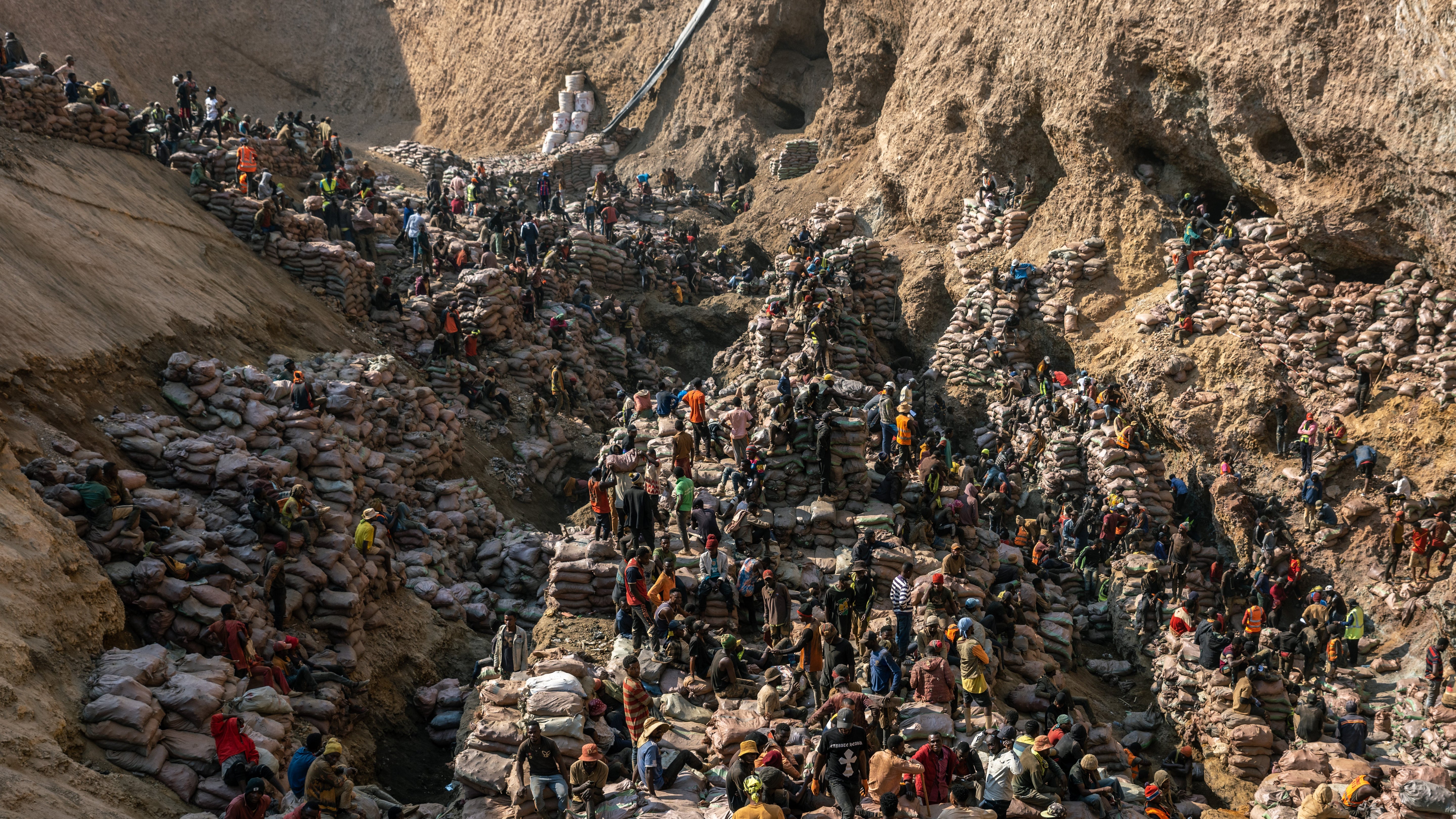
The African mining sector has once again become a major battleground in global geopolitical rivalry. As the energy transition accelerates and tensions between Washington and Beijing escalate, critical African minerals (lithium, cobalt) have emerged as key strategic assets. In this race to secure resources, the United States has opted for an indirect strategy, based on investment and financial partnerships rather than political or military intervention.
It is in this context that the strategic partnership between International Holding Company (IHC), an Abu Dhabi-based conglomerate, and the US International Development Finance Corporation (DFC), the financial arm of American diplomacy, takes shape. Presented as a framework agreement for investment in emerging and frontier markets, this alliance actually reveals a new method of American influence in Africa, where the United Arab Emirates plays a central role as an intermediary.
The IHC–DFC partnership, a new tool of American influence in Africa
Officially, the agreement aims to mobilize large-scale capital in sectors considered critical to global economic resilience: energy, infrastructure, logistics, digital technologies, health, and food security. But at the heart of this mechanism, the African mining sector occupies a strategic position.
The DFC is not a typical financial institution. Created to serve the foreign policy objectives of the United States, it combines political risk guarantees, loans, co-investments, and risk-sharing mechanisms to make viable projects deemed too sensitive or too exposed for traditional private investors. By partnering with IHC , Washington finds a partner capable of rapidly deploying capital, operating complex assets, and establishing a lasting presence in fragile institutional environments.
This arrangement allows the United States to secure its access to strategic African resources without a military presence or direct public aid, while guiding the governance and standards of funded projects.
Critical African minerals: reducing dependence on China
Africa holds a significant share of the world's mineral reserves essential for batteries, electric vehicles, energy grids, and defense industries. However, for more than a decade, China has gained a considerable lead in African mining value chains, particularly in refining and processing.
For Washington, the challenge now is to Rebalancing these supply chains is key. The partnership between IHC and DFC clearly aligns with this objective. The planned investments extend beyond mining. They also target midstream operations, logistics, energy infrastructure, and the industrial corridors necessary for the local processing of critical African minerals.
This integrated approach allows the United States to secure its supplies while reducing its dependence on infrastructure controlled or influenced by Beijing.
Why have the United Arab Emirates become indispensable in Africa?
For the United Arab Emirates, this partnership with the DFC goes far beyond financial matters. It is part of a deliberate strategy to position itself as a global investment hub, capable of connecting Western capital to African markets. By playing this intermediary role, Abu Dhabi strengthens its strategic alliance with Washington while consolidating its economic influence on the continent.
The signing of the agreement, in the presence of Sheikh Tahnoon bin Zayed Al Nahyan , chairman of IHC, alongside Syed Basar Shueb, the group's managing director, and Ben Black , managing director of the DFC, is sending a strong political signal. At a time when the Gulf is the subject of suspicion and narrative tensions surrounding possible US sanctions, this partnership acts as a clear counter-message: Washington is relying on a single Gulf player to advance its strategic priorities in Africa.
Mining investments in Africa: an American method without direct intervention
This diagram illustrates a profound shift in American strategy on the African continent. Rather than intervening directly, the United States now favors influence through investment, relying on partners capable of absorbing political risk and ensuring a long-term operational presence.
The United Arab Emirates enjoys a pragmatic image in Africa, often perceived as less intrusive than that of the former colonial powers. This acceptance facilitates the establishment of strategic projects in the African mining sector, where Western actors sometimes struggle to gain a foothold.
Economic development or new strategic dependence?
One central question remains: who will control the value chains of critical African minerals tomorrow? While these investments promise infrastructure, jobs and industrial upgrading, they also form part of a global reconfiguration of strategic dependencies.
Behind the rhetoric of development and economic resilience, the IHC–DFC partnership reveals a harsher reality. The African mining sector is becoming a major lever in the competition between great powers, where capital is now a geopolitical weapon in its own right. In this new equation, Africa once again finds itself at the heart of global power dynamics, without always controlling the rules.


Leave a comment
This site is protected by hCaptcha and the hCaptcha Privacy Policy and Terms of Service apply.