
Trump threatens military intervention in Nigeria: war of words or a real ultimatum?
With the same fervor as a general facing the enemy, Donald Trump brandished an ultimatum at Nigeria: " I'm considering a lot of things ," he declared, mentioning a possible military intervention or airstrikes, all under the pretext of a genocide of Christians in the country. Faced with these pronouncements, Abuja remained undeterred: it firmly rejected the scenario and called for dialogue. But behind the bluster, what is the real game? Diplomatic pressure, electoral posturing, or a prelude to a geopolitical shift?
Trump's outburst
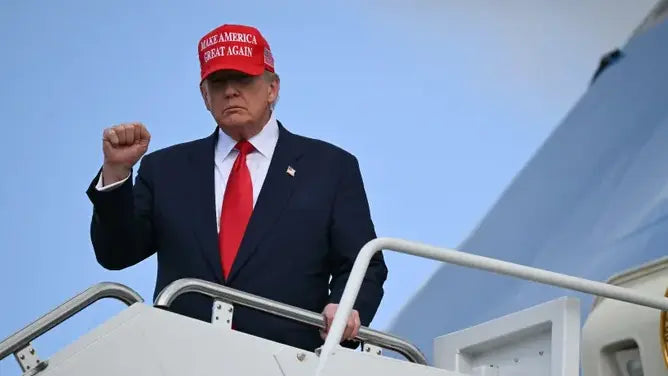
“They are killing Christians, and they are killing them in very large numbers,” Trump told reporters aboard Air Force One. He added, “We are not going to let that happen.” The US president stated that he had instructed his Pentagon to prepare for any eventuality regarding this African country. He further clarified that beyond words: "It could be ground troops, or airstrikes."
This statement comes in a context where Nigeria has just been added to the US list of "Countries of Special Concern" for violations of religious freedom. The idea of a possible withdrawal of all US aid is also being used as leverage.
For Trump, the equation is clear: if there is systematic persecution of Christians, then America must intervene even without an explicit UN mandate or a Nigerian agreement. This is the stance he adopts.
The Nigerian response and the complex reality
The Nigerian government, through its presidential spokesperson Daniel Bwala, describes these threats as a "pressure tactic" typical of Trump. Abuja rejects the characterization of the violence as "persecution of Christians," arguing that there is no religiously targeted violence, but rather an accumulation of conflicts, even terrorism, that affect both Christians and Muslims. Analysts and observers confirm that the violence is multifaceted, encompassing religious terrorism, ethno-religious clashes, land-livestock rivalries, and armed groups.
For Nigeria , what is at stake first and foremost is sovereignty: the very idea that Washington is brandishing armed intervention without respect for international frameworks provokes anger and unease.
Issues and unintended consequences
An electoral stance for international use?
Trump's approach is a mix of ideology (the rhetoric of defending persecuted Christians), electoral strategy (mobilizing a religious and conservative base), and geopolitical motives (strengthening the United States' position in Africa as a "protecting power"). His use of Nigeria, a key West African country, is undoubtedly no coincidence.
Risks of escalation or diplomatic disaster
Threatening intervention without a clear plan can lead to an uncontrolled escalation. If US troops land without a mandate, it would open the door to a major diplomatic crisis, not only between the US and Nigeria but also with Africa as a whole. Nigeria's allies, African organizations, and the UN would question the legitimacy of the intervention.
A symptom of the African malaise that has been ignored?
But more than anything, this case once again highlights the malaise in Africa: a resurgence of violence, massacres that are not always rooted in religion but rather in weak states, land disputes, and terrorists who exploit the chaos. The simplistic notion that "Christians are being massacred" obscures as much as it reveals. Nigeria is facing Boko Haram, militias, and grazing violence, not simply a sectarian war.
Why we cannot ignore this case
This episode reminds us that Africa is no longer simply a secondary area of intervention: it is at the heart of international rivalries, whether in terms of security, resources, or the model of international relations. When the American superpower brandishes the threat of military force against an African country in the name of religious freedom, it changes everything. It transforms Africa from a passive victim into a strategic player. And for Nigeria, a country of 220 million inhabitants, Washington's stance could affect its autonomy, its image, and its relations with its neighbors.
Ultimately, the real question isn't simply "will we intervene or not?" but "what does this threat reveal?" About America using religious issues as leverage. About Nigeria, which is fighting multiple fronts of violence but would like to avoid suddenly being labeled a religious war zone. About Africa, which asserts its right to manage its own crises without becoming the stage for a show of force.


Leave a comment
This site is protected by hCaptcha and the hCaptcha Privacy Policy and Terms of Service apply.